How It Works
End-to-end walkthrough of how the Carrot Network executes environmental methodologies to turn physical waste into verifiable credits and market-driven incentives.
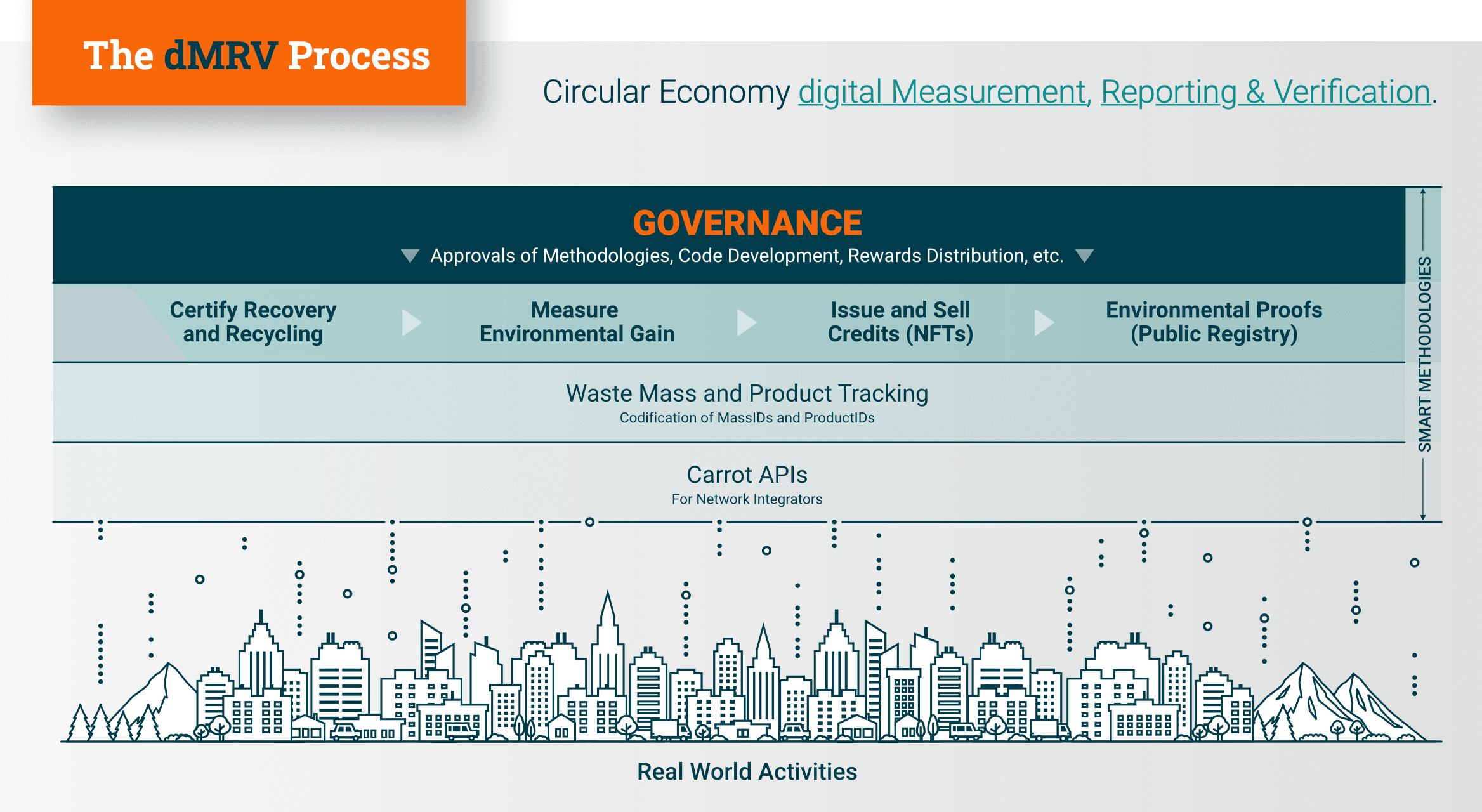
The dMRV process — from real-world activities through verification to environmental credits
The recycling supply chain
The Carrot Network digitizes the recycling supply chain — the path that materials take from waste generation through collection, sorting, hauling, and processing at accredited recycling or composting facilities. At each stage, the physical work performed by participants is recorded digitally, creating a verifiable chain of custody.
Understanding how waste logistics works is essential to understanding how Carrot creates value. Sorting and cleaning mixed waste after it has been contaminated is too expensive and technically complex for most locations. High-performance recycling requires reaching the source of waste creation — the Waste Generator — because proper sorting must happen before materials are collected, not after.
Deep dive into the recycling supply chain
From waste to digital asset
When waste materials are collected and sorted, they are codified into MassIDs — digital records that capture material type, weight, and chain of custody. MassIDs travel with the physical material through the supply chain, creating a digital twin that tracks every transfer and transformation.
Each MassID records the full chain of custody — built from data submitted by Network Integrators — enabling end-to-end traceability from waste generation to final processing.
Verifying environmental impact
When MassIDs reach an accredited recycling or composting facility, they enter the digital Measurement, Reporting and Verification (dMRV) process. Automated rule-based validation, backed by third-party auditors, confirms that the claimed environmental work was performed.
This verification step is what separates Carrot from traditional receipt-based systems. Instead of relying on paper receipts that can be duplicated and manipulated, the dMRV process executes methodology-specific rules against physical outcomes, producing verifiable and auditable results.
Generating environmental credits
MassIDs that pass methodology verification generate Certificates — non-fungible tokens that represent a specific verified environmental outcome:
- GasID — Represents greenhouse gas emissions prevented (e.g., methane avoidance from composting organic waste instead of landfilling it)
- RecycledID — Represents certified recycled material processed through an accredited facility
Certificates in turn mint fungible credit tokens: Tokenized Carbon Credits (TCC) and Tokenized Recycling Credits (TRC). These credits are standardized by material type, making them tradable commodities.
Creating a market for credits
Credits become tradable assets on a transparent, public market. Organizations and individuals purchase and retire credits to meet Extended Producer Responsibility (EPR) mandates and ESG goals.
Credits are purchased through Carrot interfaces that handle pricing and settlement — replacing the opaque, intermediary-heavy over-the-counter markets where most environmental credits are currently traded. The platform establishes prices for each credit type (e.g., 1 ton of diverted organic waste) and provides a transparent market accessible to organizations of any size, with additional credit types expected as new methodologies launch.
Learn about purchasing credits
Distributing rewards
Proceeds from credit purchases are distributed directly to the verified contributors in the recycling supply chain through smart contracts. The distribution follows the Rewards Distribution Policy, ensuring that value reaches every participant who contributed to the environmental outcome — from waste generators who sorted correctly, to haulers and processors.
This creates a self-reinforcing incentive loop:
- Waste generators are rewarded for sorting, covering their costs and encouraging continued participation
- Recyclers, Haulers, and Processors receive new revenue streams, enabling them to invest in expanding operations
- Non-participants are attracted to join the ecosystem through incentives (Recycle-to-Earn)
Read about rewards distribution
How the network grows
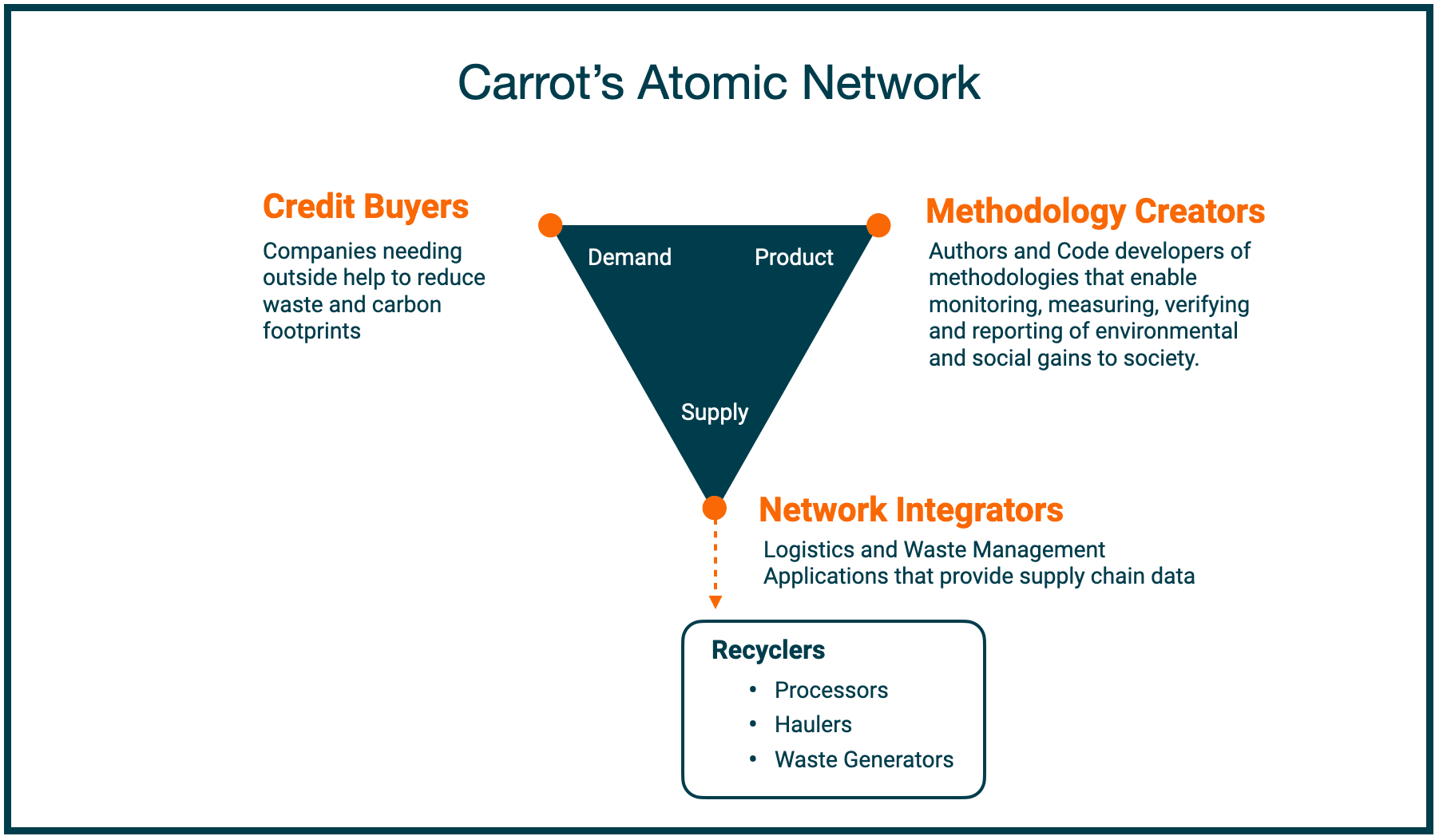
Carrot's atomic network — credit buyers, methodology creators, network integrators, and recyclers
The Carrot Network grows through Network Integrators — local waste management and logistics providers who connect their existing operations to the Carrot Network. By integrating with Carrot, these providers gain access to a new revenue stream from environmental credits, incentivizing them to onboard their entire recycling customer base.
The network's first use case — organic waste composting under BOLD Recycling and BOLD Carbon (CH₄) (BOLD: Breakthrough in Organics Landfill Diversion) — was chosen because organic waste represents approximately 50% of global waste volume and almost all of it currently ends up in landfills. Diverting organic waste to composting generates both carbon credits (methane avoidance) and recycling credits, while also removing the food contamination that degrades the quality of other recyclable materials.
From this initial use case, the network expands by introducing new methodologies for additional waste streams and by growing geographically as more Network Integrators join in new markets.
Ready to take the next step?
Understand how to buy credits, what evidence you receive, and how to start an enterprise conversation. Go to For Buyers