Recycling Supply Chain
The end-to-end flow of materials through the Carrot Network — from waste generation through collection, processing, and credit generation.
Overview
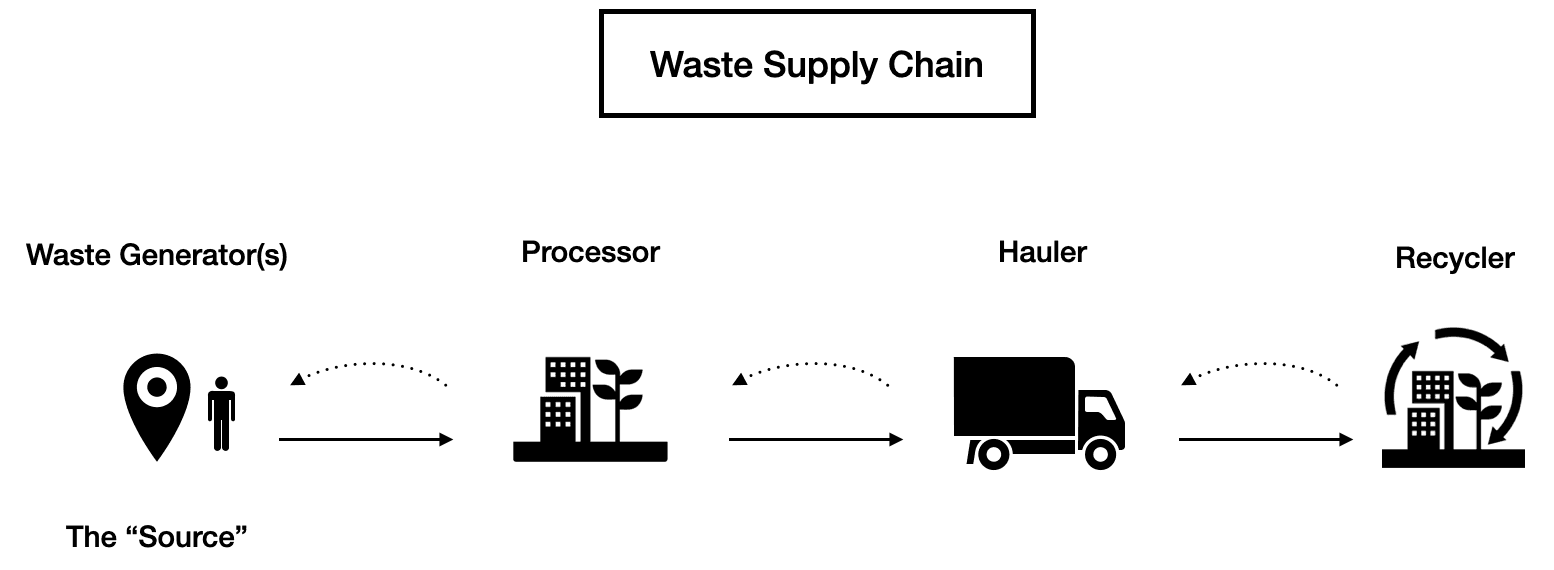
The waste supply chain — from Waste Generator through Processor and Hauler to Recycler
The recycling supply chain is the physical path that materials take from waste generation through collection, sorting, hauling, and processing at accredited recycling or composting facilities. Understanding this flow is essential to understanding how the Carrot Network creates value — every step is digitized, verified, and rewarded.
The critical principle: high-performance recycling starts at the source. Sorting and cleaning mixed waste after contamination is too expensive and technically complex for most locations. The Carrot Network's incentive system is designed to reach the Waste Generator, because source sorting is the single most impactful action for recycling performance.
Participants
Six role categories define who does what in the recycling supply chain:
| Role | Responsibility | Reward eligibility |
|---|---|---|
| Waste Generator | Produces waste and performs source sorting | Yes — rewarded for sorting quality |
| Bin Custodian | Manages collection bins and drop-off points | Yes — rewarded for bin infrastructure |
| Hauler | Transports waste between locations | Yes — rewarded for logistics work |
| Processor | Sorts, accumulates, and pre-processes materials | Yes — rewarded for processing work |
| Recycler | Performs certified recycling or composting | Yes — rewarded for recycling and processing (dual role) |
| Network Integrator | Provides the logistics software that digitizes the supply chain | Yes — rewarded as the software provider |
Participants frequently fill multiple roles. A hauler with its own sorting facility is both a Hauler and a Processor. A waste generator who delivers waste directly to a processor is also a Hauler. A recycler always receives credit for two roles: Processor (receiving and sorting) and Recycler (performing the certified recycling).
Beyond supply chain participants, the Carrot Network also distributes rewards to ecosystem participants who enable methodology execution and credit generation: the MvF Author, MvA Developer, and the Carrot Network itself (covering accreditation, audits, verification, and data processing). See the full Rewards Distribution for all participant categories.
Material flow
Materials move through the supply chain via two logistics models:
Local hauling
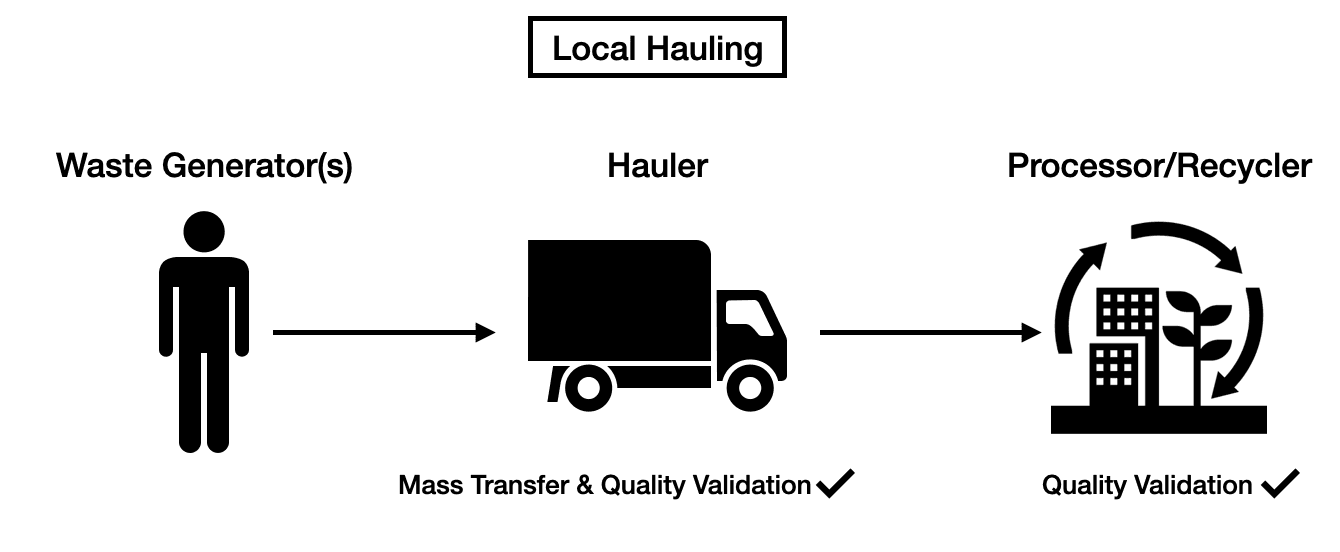
Local hauling — Waste Generator to Hauler to Processor/Recycler with mass transfer and quality validation
Haulers execute multiple pick-up events along a door-to-door route, collecting waste from generators and delivering it to a local processor. The processor validates the contents at drop-off, creating or updating MassIDs for each material type and weight.
Long hauling
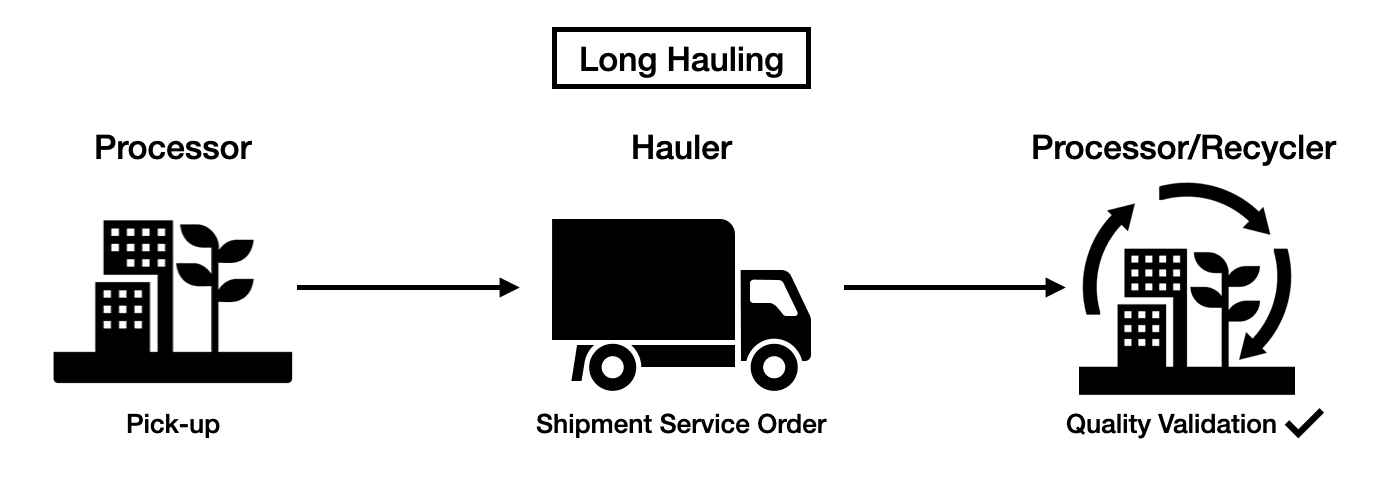
Long hauling — Processor to Hauler to Processor/Recycler with shipment event
Material is shipped from one processor to another, or from a processor to a recycler. A shipment event covers both pick-up and drop-off, with waste validated only by the receiving facility. Long-haul shipments typically carry larger volumes of pre-sorted material.
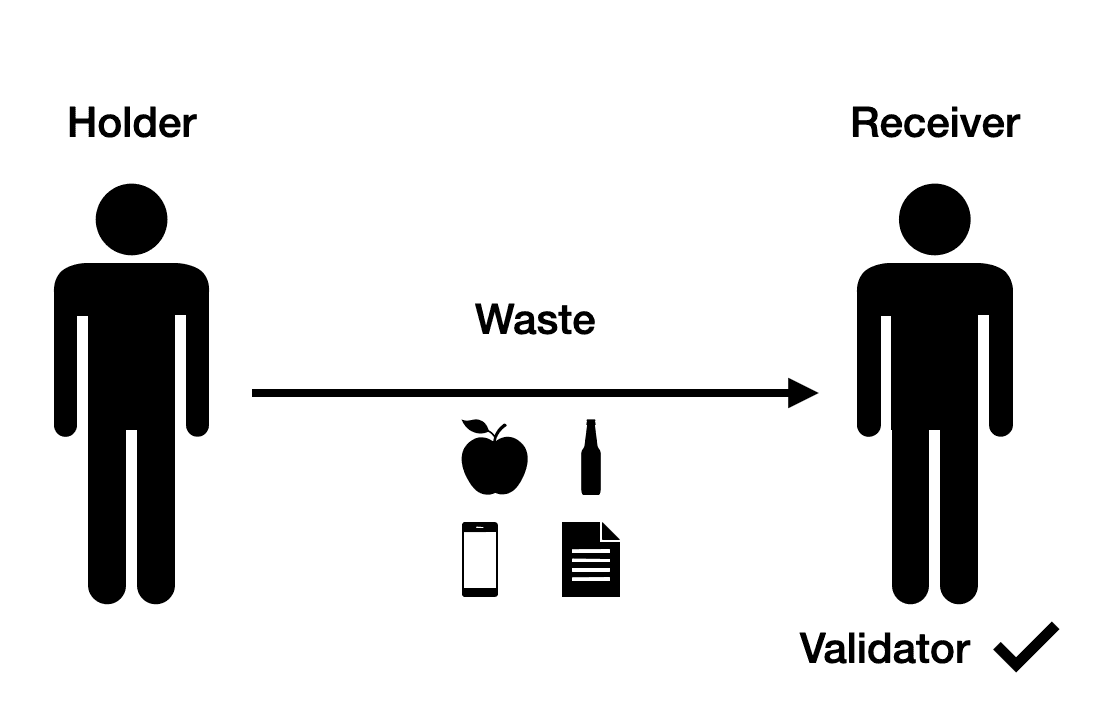
Role of the Validator — the receiver confirms waste content at each transfer
At each transfer point, the receiver acts as a Validator, confirming material content and updating the MassID chain of custody. This validation at every handoff is what creates the Proof-of-Physical-Work that underpins credit generation.
Reaching the source
The Carrot Network's rewards distribution is specifically designed to reach the waste generator — the source of waste creation. This is critical because:
- Waste generators need incentives to sort — Without feedback on sorting quality and financial rewards for participation, there is no reason for individuals and businesses to sort diligently.
- Source data enables Pay-As-You-Throw — When waste is weighed and tracked from the point of generation, each generator pays precisely for the waste they produce, creating direct incentives for waste reduction.
- Sorting at source transforms recycling economics — Removing organic waste contamination from recyclable streams can improve recovery rates by 2-4x at downstream sorting facilities.
Certified recycling rewards, distributed via the MassID chain of custody, provide the economic incentive for generators to sort properly and stay engaged with the system.
The role of the Recycler
The Recycler occupies a special position in the supply chain. A Recycler is a processor that has been accredited by third-party auditors to perform certified recycling for a specific waste material type.
- A glass bottling plant using cullet in its furnaces is a certified glass Recycler — it cannot recycle plastic.
- A composting facility transforming food waste into compost is a certified food waste Recycler — it cannot recycle electronics.
Only when MassIDs reach an accredited Recycler and pass the dMRV validation process do they become eligible for tokenization into Tokenized Recycling Credits (TRC) and Tokenized Carbon Credits (TCC).
How the supply chain creates value
The recycling supply chain creates value by connecting waste generators who need disposal services with credit buyers who need environmental offsets — and rewarding every verified contributor in between:
- Waste Generators gain visibility into their waste footprint, earn rewards for sorting, and can demonstrate compliance with waste regulations.
- Bin Custodians open the door for private companies and public-private partnerships to sponsor bin networks, earning rewards from credit purchases.
- Haulers earn new revenue streams from dedicated routes for specific waste types, supplementing traditional hauling income.
- Processors and Recyclers receive additional revenue from credit purchases on top of existing material sales, improving the economics of recycling as a professional service.
- Network Integrators earn a share of rewards for providing the logistics software that digitizes the supply chain.
This decentralized reward system opens the recycling market to innovation and entrepreneurial activity, ensuring all stakeholders are rewarded for their verified environmental contribution.