The Problem
The linear economy, global waste crisis, broken carbon markets, and the failure of existing approaches to scale recycling.
The linear economy is failing
More than 80% of everything produced and consumed by humans ends up as pollutants — buried in landfills, dumped into water bodies, or burned into the atmosphere. The take-make-waste model, known as the linear economy, offloads the environmental costs of waste production into the commons and distributes disposal costs uniformly across taxpayers, providing no incentive to reduce, sort, reuse, or recycle.
The numbers are stark:
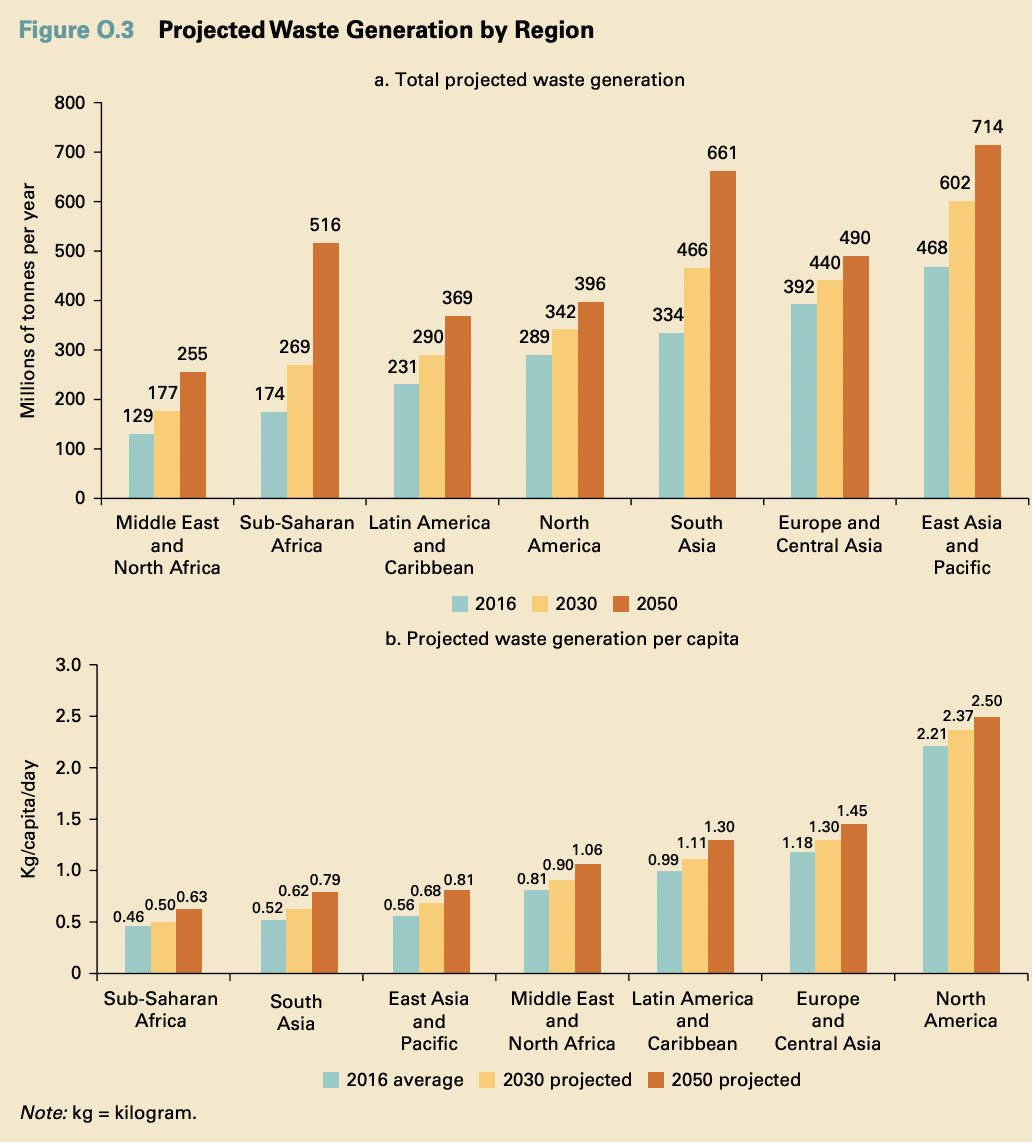
Projected global waste generation by region
World Bank, What a Waste 2.0, 2018- The world generates over 2 billion tons of municipal solid waste annually, expected to reach 3.4 billion tons by 2050 (World Bank, What a Waste 2.0).
- 33% of global waste is openly dumped. Only 19% is recovered through recycling or composting.
- Toxins and airborne particulate matter from landfills and burned waste are linked to respiratory diseases and cancer.
- Liquid runoff (leachate) drains into water bodies, contaminating soil and aquifers.
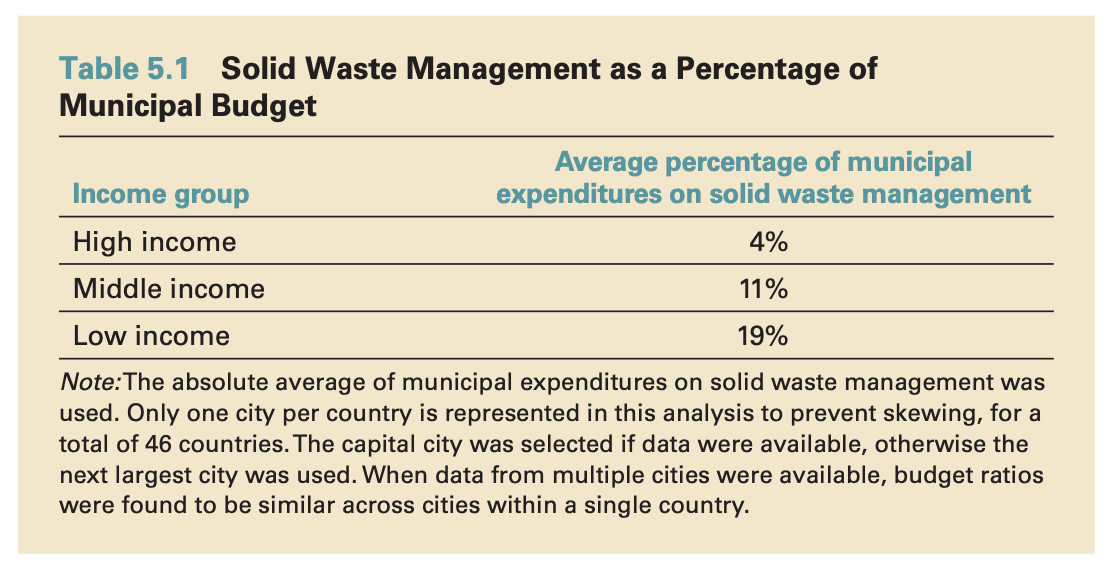
Waste management typically represents the largest share of municipal budgets in developing countries
World Bank, What a Waste 2.0, 2018As global GDP grows, so does waste per capita — and developing countries experience the fastest increases in waste generation relative to income growth.
Resource scarcity compounds the crisis
Global resource use has more than tripled since 1970. Commodity prices have begun to outpace economic growth, signaling increasing scarcity. Without a shift to reuse and recycling, supply chains face growing risk from limited raw material availability.
A sustainable path requires decoupling economic growth from virgin resource consumption — keeping existing materials in the economy for as long as possible and transitioning to regenerative materials where feasible.
Existing solutions aren't scaling
Landfills, incineration, composting infrastructure, producer responsibility programs, and carbon markets have each attempted to address the waste crisis — but none has achieved the scale or trust needed for systemic change.
Physical waste, unlike carbon, is tangible, measurable, and verifiable. Recycling and composting offer documented, science-based methods for reducing greenhouse gases — backed by frameworks from the UNFCCC, the EPA WARM model, and the Greenhouse Gas Protocol. This makes waste-based environmental credits a potentially higher-quality alternative to traditional carbon offsets.
The opportunity
The transition from a linear to a circular economy requires market forces and incentives at every level — from individual waste generators to industrial processors. Businesses need financial incentives to source recycled inputs and design for recyclability. Individuals need to trust that their sorting efforts lead to real recycling outcomes and be rewarded for participating.
What's missing is a system that can track, verify, and incentivize recycling and composting at scale — creating a market-driven circular economy where environmental impact is transparent, tradable, and trustworthy. This requires robust supply chain traceability and digital measurement, reporting, and verification (dMRV) to ensure every claim is backed by auditable data.
The Network
The Carrot Network — a circular economy crediting system that turns verified recycling into tradable environmental assets through open methodology rules, independent verification, and publicly auditable records.
The Solution
How Carrot addresses the waste crisis through circular economy incentives, PAYT, EPR, and digital verification.